Note: Consult a doctor for health advice. Check out my favorite health products here: (Amazon Affiliate commission applies)

Best Extra Thick Yoga Mats for Bad Knees
Protect your joints with the best extra thick yoga mats designed for bad knees. Discover our top picks that offer superior cushioning, grip, and ensure a pain-free yoga practice.Best Extra Thick Yoga Mats for Bad Knees
YOGA GEAR
Rajesh Kumar
3/9/20267 min read
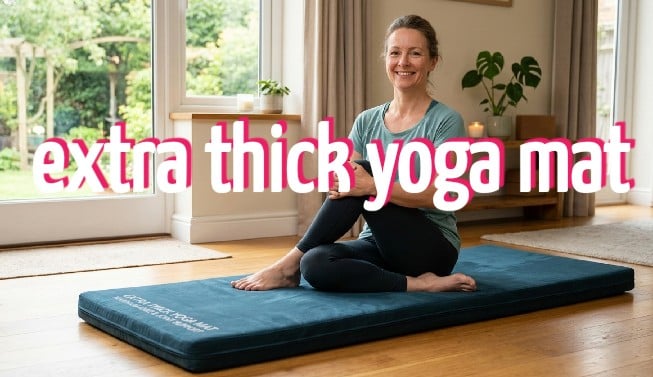

My dear friends, welcome back to our wellness journey! If you have ever been in the middle of a peaceful yoga session only to be jolted out of your zen by a sharp pain in your knees, you are definitely not alone.
Many of us turn to yoga and naturopathy for healing, flexibility, and peace of mind. But when our joints hurt—especially during kneeling poses like Cat-Cow, Camel, or Low Lunge—that healing practice can quickly become a painful chore. The culprit? Usually, it is a paper-thin yoga mat placed on a hard floor.
Today we're going to tell you exactly how to fix this problem. We are diving deep into the world of joint-friendly workout gear to find the best extra thick yoga mats for bad knees. Whether you are practicing on carpet, tile, or looking for the best yoga mat for hardwood floors with bad knees, there is a perfect mat out there for you.
Ready to say goodbye to knee pain and hello to comfortable, supported practice? Let's find out!
Why Standard Yoga Mats Fail Sensitive Joints
Standard yoga mats are usually around 3mm to 4mm thick. While these thin mats are fantastic for balance and feeling grounded during standing poses, they offer almost zero shock absorption. When you put your full body weight onto your kneecaps, wrists, or hips on a 3mm mat, you are essentially pressing your joints directly into the floor.
If you have sensitive joints, arthritis, or are recovering from an injury, this lack of cushioning can cause inflammation and lingering pain. This is why upgrading to a thick exercise mat for knee pain isn't just a luxury—it is a necessity for a sustainable, healthy practice.
What to Look for in a Yoga Mat for Bad Knees
Before you buy, it is important to understand that not all thick mats are created equal. You cannot just buy a fluffy camping pad and expect it to work for downward dog! Here are the core factors you need to keep in mind:
1. Thickness vs. Density
When shopping for an extra thick non-slip yoga mat for bad knees, you need to look at both thickness and density.
* Thickness: Look for mats that are at least 6mm (1/4 inch) to 15mm (1/2 inch) thick. Anything thicker than 1 inch might compromise your balance.
* Density: A mat can be an inch thick, but if it is made of cheap, airy foam, your knees will just sink right through to the floor. High-density foam or natural rubber provides push-back and support, keeping your joints elevated.
2. Material
The material dictates the grip, eco-friendliness, and durability.
* PVC (Polyvinyl Chloride): Extremely durable and provides great density. However, it is not very eco-friendly.
* TPE (Thermoplastic Elastomer): A great middle-ground. It is lightweight, offers fantastic cushioning, and is more environmentally friendly than PVC.
* Natural Rubber: The ultimate choice for an eco-friendly yoga mat for bad knees. It is heavy, dense, and naturally grippy, though it can be pricier.
3. Grip and Texture
Thicker mats sometimes sacrifice grip. If you do hot yoga or tend to sweat, you need a mat with a textured, closed-cell surface so you don't slip and risk further injury.
Top 5 Best Extra Thick Yoga Mats for Bad Knees
Here are our top recommendations for the best yoga mats designed to cradle your joints, based on durability, cushioning, and real-world performance.
1. Manduka PRO Yoga Mat (Best Overall for Density)
When you ask yoga instructors what the best mat is, the Manduka PRO comes up constantly. While it is 6mm thick (which doesn't sound "extra" thick), it features an ultra-dense, closed-cell construction.
Why we love it:
The density of the Manduka PRO means your knees will never bottom out and touch the floor. It provides joint protection without compromising your balance during standing poses like Tree Pose. It is also backed by a lifetime warranty.
* Pros: Unmatched durability, incredible joint support, lifetime guarantee.
* Cons: It is heavy (over 7 lbs) and requires a "break-in" period to reach its maximum grip.
* Best for: Serious practitioners looking for a lifelong investment.
2. Sivan Health and Fitness 1/2-Inch Extra Thick Yoga Mat (Best on a Budget)
If you want maximum plushness without breaking the bank, this is the best extra thick yoga mat for bad knees on a budget. At 1/2 inch (about 12mm) thick, it feels like practicing on a supportive cloud.
Why we love it:
Made from NBR foam, this mat uses specially designed memory foam to protect your knees and joints while gripping the floor. It also comes with an integrated carry strap.
* Pros: Very affordable, extremely thick, lightweight for its size.
* Cons: The plush foam can make standing balance poses slightly wobbly; it may stretch slightly during intense poses like downward dog.
* Best for: Restorative yoga, Yin yoga, and Pilates.
3. Jade Fusion Yoga Mat (Best Eco-Friendly Option)
If you prefer naturopathy and living a green lifestyle, the Jade Fusion is your perfect match. At 8mm (5/16 inch) thick, it is significantly thicker than standard natural rubber mats.
Why we love it:
Jade mats are made from sustainably tapped rubber trees and contain no PVC or synthetic rubber. The grip on this mat is legendary—you will not slip, even in a sweaty class. The 8mm thickness provides a wonderful, bouncy cushion for aching knees.
* Pros: 100% eco-friendly, superior grip, excellent cushion.
* Cons: Natural rubber has a distinct smell at first, and it is quite heavy to carry around.
* Best for: Eco-conscious yogis and hot yoga enthusiasts.
4. Gaiam Premium Extra Thick Yoga Mat (Best for Beginners)
Gaiam is a household name in the wellness space, and their 6mm Premium Extra Thick line strikes a beautiful balance between comfort, affordability, and design.
Why we love it:
These mats come in dozens of beautiful, inspiring prints. The 6mm PVC provides enough cushion to take the edge off a hard floor without making the mat too bulky to carry to your local studio.
* Pros: Gorgeous designs, lightweight, affordable, lightly textured for grip.
* Cons: Not as dense as the Manduka PRO, so very severe knee pain might still require a folded blanket.
* Best for: Beginners looking for a beautiful, reliable, and portable mat.
5. Crown Sporting Goods 1-Inch Extra Thick Mat (Maximum Cushioning)
Sometimes, 1/2 inch just isn't enough. If your joints demand the absolute highest level of protection, this 1-inch (25mm) thick mat is a game-changer.
Why we love it:
This is essentially a physical therapy mat. Made of high-density foam, it completely isolates your body from the hard floor beneath. It is the ultimate thick exercise mat for knee pain.
* Pros: The thickest mat on the market, supreme comfort, great for physical therapy.
* Cons: Way too thick for balance poses (you will need to step off the mat for balancing), bulky to store.
* Best for: Floor-based exercises, gentle stretching, and severe joint sensitivity.
Alternative Solutions for Knee Pain During Yoga
My dear friends, what if you already have a yoga mat that you love, but you just need a little extra help? You don't necessarily have to throw your old mat away. Here are some excellent modifications and accessories:
1. Yoga Knee Pads
Did you know they make mini-mats specifically for your knees? Yoga knee pads (often made of gel or high-density foam) are small, circular, or rectangular cushions you can place directly under your knees or wrists during specific poses. They are cheap, highly portable, and incredibly effective.
2. The Blanket Fold Trick
This is a classic studio trick. Keep a woven Mexican yoga blanket nearby. Whenever you move into a kneeling pose, fold the blanket neatly and place it beneath your knees. It provides instant, customizable cushioning.
3. Fold Your Mat
If you are transitioning into a quick kneeling lunge and don't have props, simply grab the edge of your yoga mat and fold it over itself once or twice. This instantly doubles or triples the thickness under your joint. Just remember to unfold it when you move on!
Posture Adjustments to Protect Your Knees
Equipment is only half the battle. How you move your body matters just as much. Keep these anatomical tips in mind to protect your joints:
* Engage Your Core: When you drop your knees to the mat in poses like Tabletop, do not just let your body weight sag into the floor. Engage your abdominal muscles to "lift" your weight slightly out of your joints.
* Flex Your Feet: In poses like Pigeon pose, flexing the foot of your bent leg actively engages the muscles around the shin and knee, stabilizing the joint and preventing twisting.
* Avoid Hyperextension: If you have hypermobile joints, be careful not to "lock" your knees out backward during standing poses like Triangle. Keep a microscopic bend in the knee to keep the muscles engaged.
Frequently Asked Questions (FAQs)
What is the best thickness for a yoga mat for bad knees?
For bad knees, the ideal thickness generally ranges from 6mm to 12mm (1/4 inch to 1/2 inch). If you choose a 6mm mat, ensure it is made of high-density material like natural rubber or closed-cell PVC. If you choose a 12mm mat, foam works well, but be prepared to step off the mat for balancing poses.
Can a thick yoga mat affect my balance?
Yes, it certainly can. Extremely thick, squishy mats (like 1/2-inch NBR foam) absorb your foot's micro-movements, making it harder to balance in poses like Tree or Eagle. The solution is either to choose a dense 6mm-8mm mat or simply step off your highly cushioned mat onto the bare floor when doing standing balance work.
Are extra thick yoga mats good for hot yoga?
They can be, but only if they have the right surface texture. Thick mats that are smooth will become slip-and-slides when drenched in sweat. If you practice hot yoga, look for a thick mat with an open-cell, grippy texture (like polyurethane or natural rubber), or lay a grippy yoga towel over your thick mat.
Is memory foam good for a yoga mat?
Memory foam is incredibly comfortable for lying down and restorative yoga, but it is not ideal for active Vinyasa flows. It tends to hold the shape of your hand or foot for a few seconds, which can trip you up during fast transitions.
Final Thoughts
Practicing yoga should be a time of healing, mindfulness, and strength-building—not an exercise in enduring joint pain. By upgrading to one of the best extra thick yoga mats for bad knees, you are investing in the longevity of your practice and the health of your body.
Remember, my dear friends, listen to your body. If a pose hurts your joints, back out of it. Grab a blanket, use a knee pad, or upgrade your mat. Your knees carry you through this world every single day; they deserve a little extra cushioning!
Contact
rkyogablog@gmail.com