Note: Consult a doctor for health advice. Check out my favorite health products here: (Amazon Affiliate commission applies)

Elevate Your Ashtanga Practice with Cotton Rugs
Ready to enhance your Ashtanga practice? Discover the transformative benefits of transitioning from a modern sticky mat to a traditional cotton rug. Our comprehensive buying guide covers the philos...Elevate Your Ashtanga Practice with Cotton Rugs
YOGA GEAR
Rajesh Kumar
3/13/20268 min read
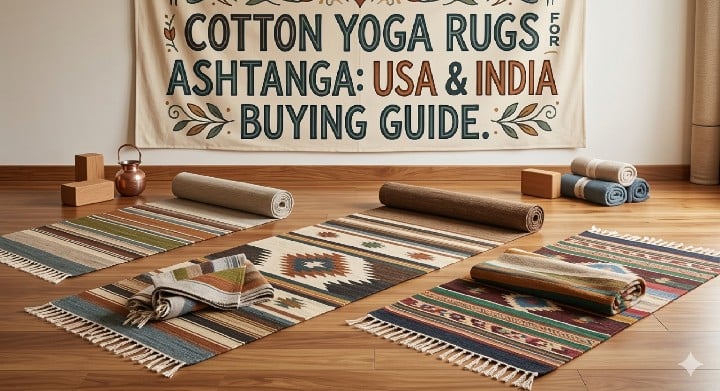
The Soul of the Practice: The Best Cotton Yoga Rugs for Ashtanga Yoga (USA & India Buying Guide)
My dear friends, welcome to this discussion about a critical, yet often overlooked, element of our yoga practice.
If you are reading this, chances are you are either deeply entrenched in the intense, transformative journey that is Ashtanga Yoga, or you are standing on its precipice, looking in. Either way, you have likely realized that this practice is different. It’s hot. It’s sweaty. It’s demanding. It requires a relationship not just with your breath and your body, but also with your mat.
Many practitioners start their Ashtanga journey on a modern, sticky, polyurethane mat. These are great for Hatha or Vinyasa classes. But as you progress through the Primary Series, perhaps working on your jumps back to Chaturanga or your Bhujapidasana, you will invariably encounter a dilemma: the puddle of sweat.
That is when the transition to a traditional cotton yoga rug (often called a Mysore Rug) happens. It’s a rite of passage.
In my experience, making the switch from a sticky mat to a cotton rug was the single most impactful change I made in my physical practice. It wasn't just about absorbing sweat; it redefined my understanding of traction and bandhas.
The cotton rug is the traditional surface for Ashtanga yoga, as taught by Krishnamacharya and Pattabhi Jois in Mysore, India. There is a deep, philosophical, and practical reason for this. Let's explore this now.
Why Cotton? The Philosophy and Practicality of the Rug
Ashtanga is a practice of creating tapas (internal heat). This heat is vital; it purifies the body and helps us safely deepen into asanas. A sticky rubber mat traps that heat externally. It stops you from slipping by grabbing your skin. This sounds good, but as far as reality is concerned, it can sometimes create a false sense of security and actually hinder your development of mula and uddiyana bandhas (energy locks).
A cotton rug works differently. It functions as a porous, breathing extension of your body.
When you start the practice, the rug might feel a little slick. You have to actively engage your hands and feet, gripping the rug (a practice known as pada bandha and hasta bandha). You can't rely on sticky material to hold you.
Then, as you build heat during the Surya Namaskars, you begin to sweat. Here is where the rug shines: it absorbs that sweat completely. It doesn't puddle. And beautifully, as the cotton gets damp, its grip actually increases.
The connection feels organic. It is a connection between you and a natural fiber, which in turn connects you to the earth beneath.
The traditional weave of these rugs often features ribs or thick lines, which provide excellent reference points for foot and hand placement.
The Problem of Global Sourcing
Finding the perfect cotton rug, however, can be tricky. It depends entirely on where you are in the world. The traditional heart of these rugs is, of course, India. However, Ashtanga has a massive global community, and many practitioners in the USA are looking for accessible, high-quality alternatives without the challenges of international shipping.
Without taking up any more time, let's proceed to what actually constitutes a quality cotton rug before we divide our guide between the two nations.
What to Look For in a Quality Cotton Ashtanga Rug
Not all cotton rugs are created equal. When shopping, keep these factors in mind:
Material: It must be 100% cotton. Organic is better for the planet and your skin. Some newer "handloom" rugs might mix synthetics, which ruins the absorption property.
Weave Density: A rug for Ashtanga needs to be tightly woven. If the weave is loose, the rug will stretch during Adho Mukha Svanasana (Downward Dog) or shift too much when jumping through. You want a heavy, dense feel.
The Texture/Ribs: Traditional Mysore rugs have a characteristic ribbed texture. This is excellent for grip. Flat-woven rugs (like some dhurries) can also work but may require a bit more sweat to active their grip.
Natural Dyes vs. Chemical Dyes: The finest rugs use herbal or natural dyes (this leads to the Ayurvastra tradition discussed later). They are gentler on the environment. But beyond sustainability, some practitioners (including me) prefer natural dyes because they feel less "waxy" when brand new compared to heavily treated chemical dyes.
Dimensions: Ashtanga involves jumping forward and back. You need a rug long enough that your feet aren't slipping off the end during Chaturanga or Upward-Facing Dog. Ensure the length is at least 72 inches (183cm), if not more.
Part 1: The USA Buying Guide (Accessibility and Reliability)
The market in the USA is distinct. While we all love the connection to India, practicalities like shipping times, customs, and return policies often make local purchase the smarter move for American practitioners.
Here, "best" is a balance of traditional authenticity and modern convenience.
1. The Gold Standard: Hugger Mugger Cotton Yoga Rugs
Hugger Mugger is an icon in the American yoga scene, and for good reason. They are one of the few long-standing companies that have remained true to the classic Mysore rug design.
In my experience, the Hugger Mugger rug is the benchmark. If you purchase one of these, you know exactly what you are getting.
Why we like it: They are handwoven in India, adhering to the traditional method. The weave is exceptionally tight and heavy, meaning it won't bunch up easily. It has the distinct ribbed pattern that Ashtangis require for grip. They use colorfast (safe chemical) dyes that retain their vibrancy but still feel organic under the hands.
The Verdict: If you are a beginner to the Primary Series or just want a dependable, traditional rug without the hassle of direct import, this is the safest and best quality choice in the USA. It may require a few washes to truly break in and find its maximal grip, but it will last you a lifetime.
2. The Premium Alternative: Manduka eQua Yoga Towel (With a Caveat)
Okay, this isn't a rug. It’s a towel. However, we cannot have a USA buying guide without acknowledging that a vast number of Ashtangis in the USA use these high-end microfiber options over their rubber mats.
Why we like it: Manduka is the king of grip in America. Their eQua towel is phenomenal. When dry, it has a pleasant, suede-like feel. When damp, it locks onto your hands and feet with an intensity that cotton struggles to match. It is light, packs easily, and dries quickly.
The Caveat: It is not traditional. Using a towel over a rubber mat still creates that layer of rubber insulation. You will also miss the grounding weight of a 3-pound cotton rug. If you value raw, absolute grip and portability above all else (like the historical connection), this is the USA preference. If you want the authentic Ashtanga experience, stick with the rug.
3. Ethical and Sustainable: Specialized Boutique Sellers on Etsy or Small Shops
The USA has a thriving marketplace for ethical importers. Many long-time practitioners travel to India, make connections with looms, and import small batches of high-quality, often organic or naturally dyed rugs.
Why we like it: Searching Etsy (using terms like "Mysore Yoga Rug Organic" or "Handloom Yoga Rug India") often yields small businesses importing directly from Kerala or Karnataka. These sellers often vet their product heavily. You might pay a premium for shipping or the curated product, but you are supporting small-scale ethical trade.
The Verdict: For the advanced practitioner looking for something unique, ethically sourced, and naturally dyed (but living in the US), this is where you will find the soul of the practice.
Part 2: The India Buying Guide (Authenticity and The Source)
Buying a yoga rug in India is a completely different, wonderful, and sometimes maddening experience. If you are a regular practitioner, you likely aim to make a pilgrimage to Mysore eventually.
When in India, especially Mysore, the term "Mysore Rug" is not a marketing phrase; it’s a standard. This guide is for those traveling to India or attempting to navigate direct shipping from Indian vendors.
1. The Ultimate Choice: Ayurvastra (Herbal-Dyed) Rugs
If you are looking for the absolute best, most holistic connection to the practice, you must explore Ayurvastra.
"Ayurvastra" translates loosely to "life-clothing" (Ayurveda + Vastra). These are rugs woven with 100% organic cotton and dyed exclusively using plants, barks, roots, and herbs from traditional Ayurvedic medicine (like turmeric, neem, ashwagandha, and indigo).
Where to find them: This is where things get tricky. While you can find them in Mysore, the production center is often in Kerala.
Why we love them: They are not just functional; they are considered therapeutic. Practitioners believe that as you sweat and your pores open, the beneficial properties of these herbs are subtly absorbed by the body. They smell faint and wonderful (like an herbal tea). They are the softest cotton rugs available and have the deepest historical resonance.
The Reality: They are the most expensive. Also, as far as reality is concerned, their "grip" profile is slightly different. Because they aren't treated with chemical fixatives, they can feel a little softer and slicker initially than a standard rug. They require patience to break in.
2. The Shala Standards: Local Shops Around KPJAYI/Sharath Jois Yoga Shala
If you find yourself in Gokulam, Mysore (the neighborhood where many Ashtangis stay and practice), you are in the heart of the rug world.
Every third shop near the main shala (where Sharath Jois or Saraswathi Jois teach) sells Mysore Rugs. These shops know their audience.
Where to look:
"The Small Rug Shops": You cannot miss them. Small street-front shops displaying colorful rugs.
Ratan's: A well-known textile shop frequently visited by practitioners for clothing and rugs.
What to expect: You won't find major "brands" here. You will find stacks of handloom rugs. They will have varying degrees of weave tightness.
The Experience: You must feel them. You walk in, pick up a rug, and feel its weight. Is it heavy? Does it have the ribbed texture you want? How does the raw cotton smell? This is the most authentic buying experience. These are "daily driver" rugs. They are robust, affordable, and made to withstand 6 days a week of practice for years.
3. Modern Indian Quality: Ethicus (For the Online/Long-Distance Buyer)
If you are in India (or are ordering from India) but cannot visit Mysore or Kerala, you need a reliable online brand. Ethicus is a shining example of modern Indian craftsmanship that still respects the traditional requirements of the practice.
Why we like it: They are incredibly transparent about their supply chain ("farm to loom"). They produce high-quality organic cotton handloom textiles. While they make general home goods, their rugs are superb. The weave is tight, the designs are beautiful, and they bridge the gap between "artisanal" and "commercially reliable."
The Verdict: The best choice for someone wanting high-end, ethical, guaranteed quality sourced within India, without navigating a physical market.
The Transition: From Sticky to Rug (Practical Advice)
Once you buy your rug (whether Hugger Mugger in the USA or herbal in Mysore), the work has just begun. The first practice on a new rug can be humbling.
In my experience, you should not give up after one try.
The Break-In Period
Most rugs have a coating of factory starch or just the natural waxes of the cotton itself. When they are brand new, they will slide everywhere on your mat, and your hands will slide on them.
1. Wash it immediately. Wash it 2-3 times before you ever practice on it. Use cold water (to prevent massive shrinkage) and a very mild detergent. Do NOT use fabric softener, which will coat the fibers and ruin the sweat absorption. Air dry it.
2. The "Stick-Rug-Trick." This is essential. A cotton rug is meant to be placed over a yoga mat (preferably a thin, closed-cell rubber mat like a Manduka superlite or a cheap PVC mat). The rug is for your sweat; the mat is to keep the rug from sliding on the floor.
3. Engage your Bandhas! Remember, you can't rely on the mat to hold you. This is the whole point. Focus on engaging the muscles of your hands and feet. Grip the ribs of the rug. This is where your practice will deepen and become more internal.
4. Wet your hands (if needed). If your rug is very dry and you are sliding, spray or splash a tiny bit of water where your hands and feet go for Surya Namaskar. Once your own body heat kicks in, you won't need the water anymore.
Conclusion
The journey of Ashtanga Yoga is a path of transformation, and the tools we use on that path matter. The shift from a synthetic sticky mat to a natural, absorbent cotton rug is more than a practical choice—it’s an energetic shift, a connection to a centuries-old tradition.
My dear friends, whether you pick up a dependable Hugger Mugger in the USA to begin your Mysore style practice, or you find yourself in the small, chaotic markets of Gokulam searching for the perfect handloom Chader, you are making an investment in the longevity of your practice and the earth. Let the cotton absorb the sweat and the tapas that you work so hard to create. Trust the rug, engage your bandhas, and breathe.
Contact
rkyogablog@gmail.com