Note: Consult a doctor for health advice. Check out my favorite health products here: (Amazon Affiliate commission applies)

How to Create a Quiet Meditation Space at Home
Discover how to transform any small space into a peaceful meditation corner that promotes inner calm. You don't need a large room or fancy setup—just a quiet spot in your home. Learn tips on findin...How to Create a Quiet Meditation Space at Home
MEDITATION
Rajesh Kumar
6/5/20263 min read
Life gets incredibly loud. Between constant phone notifications, piles of dirty dishes, and the traffic buzzing outside your window, finding a single moment to just sit and breathe feels like a massive chore.
I used to think that to meditate properly, I needed to live in a remote cabin or own a giant house with an empty spare room. I tried meditating on my living room couch right next to a pile of unfolded laundry while my partner watched TV in the next room. It was an absolute disaster. My mind kept jumping from the noise on the screen to the chore waiting on the cushions.
But I learned a valuable lesson from that failure. My dear friends, you do not need a massive budget or a sprawling mansion to find your inner calm. You can build a beautiful, quiet slice of heaven right inside your current home, even if you only have a few square feet to spare. I feel that we all deserve a dedicated spot where the chaotic rush of the outside world simply cannot touch us.
Finding the Perfect Meditation Corner
You do not need an entire room to make this happen. A tiny, unused corner in your bedroom, an alcove under the stairs, or a sunny spot by a living room window will work beautifully. Let's explore this now.
When you look around your living space for the right location, try to view your rooms with fresh eyes. You want to avoid high-traffic areas at all costs. Do not pick a spot right next to the kitchen fridge or the main hallway where everyone walks. As far as reality is concerned, if you choose a place where your family members or roommates constantly pass by, you will spend your entire practice time waiting for someone to bump into you.
Instead, look for dead space. I once set up a temporary meditation spot inside a large walk-in closet, and it was one of the quietest setups I ever had. If you have a corner that currently holds a dusty exercise bike or a stack of old cardboard boxes, clear it out. That forgotten corner might just be your new favorite sanctuary.
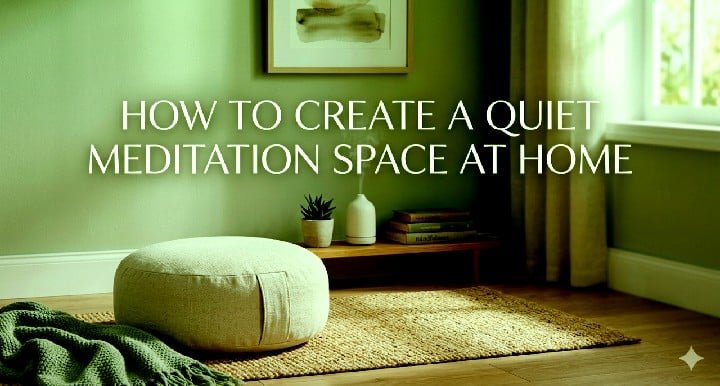
Take a look at the setup in the image above. You can see how a simple, well-arranged corner instantly feels like a separate world. The large woven round rug creates a distinct boundary on the wooden floor, separating the meditation zone from the rest of the room. Soft, thick floor cushions provide immediate comfort, while the candle lanterns add a warm, grounding touch. You can easily replicate this vibe in any room of your house.
Clearing Out the Visual Noise
Once you pick your spot, you need to clean it up. Visual clutter leads directly to mental clutter. I have observed that if I try to calm my mind while staring at a stack of unpaid bills or a basket of messy toys, my brain immediately kicks into stress mode.
Keep your chosen corner completely free of daily household chores and stress triggers. If you are meditating in your bedroom, position your cushion so you face away from your workspace or your unmade bed. Out of sight, out of mind.
If you live in a tiny studio apartment where everything stays visible all the time, do not panic. You can easily use a simple fabric room divider, a tall potted plant, or a folding screen to block off your view. Creating that physical and visual barrier tells your brain that it is time to shift gears from doing chores to just being present.
Choosing the Best Meditation Cushions and Seating
Without further ado, let's proceed to the actual setup of your space. Comfort is your absolute top priority here. If your back aches or your legs fall asleep within two minutes, you will start hating your practice.
In my experience, investing in proper seating changes the entire game. You want your hips to sit slightly higher than your knees because this alignment keeps your spine naturally straight and takes the pressure off your lower back.
Lighting and Sound for Ultimate Calm
Lighting sets the mood instantly. Harsh overhead fluorescent lights feel cold and clinical, which is the exact opposite of what we want. If your space receives natural sunlight during the day, embrace it. Sunlight warms up a space like nothing else.
For evening or early morning practices, switch off the big lights and opt for soft, warm sources. Think about adding a small salt lamp, a dimmable bedside lamp, or a few battery-operated LED candles. Real candles work wonderfully too, but I prefer the safety of LEDs so I don't worry about an open flame when I close my eyes.
Sound is the next big hurdle. Unless you live deep in the woods, you will probably hear neighbors, barking dogs, or roommates. Do not let these noises ruin your peace. You can easily combat unwanted background noise with a simple white noise machine or a fan.
Contact
rkyogablog@gmail.com