Note: Consult a doctor for health advice. Check out my favorite health products here: (Amazon Affiliate commission applies)

How to Create and Sell Your Own Online Yoga Course
Transform your passion for yoga into a successful online business. Discover how to find your niche, film high-quality classes with your smartphone, and effectively market your courses to students worldwide. How to Create and Sell Your Own Online Yoga Course
YOGA GEAR
Rajesh Kumar
4/28/20266 min read
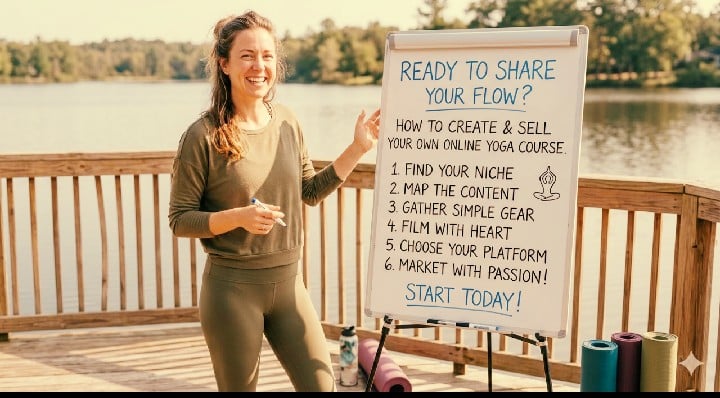
My dear friends, it’s so good to have you here. I’ve noticed something lately while scrolling through my feeds and talking to folks at the local coffee shop. Everyone seems to be looking for a way to share what they love while also making a little extra cash from the comfort of home. If you’re a yoga teacher, or even just a dedicated practitioner who knows your stuff, there has never been a better time to get your flow out into the world.
As far as reality is concerned, the days of needing a massive studio or a fancy production crew to launch a course are long gone. I’ve seen people film entire series on their porch with nothing but a smartphone and a tripod. In my experience, the most successful courses aren't the ones with the flashiest editing; they’re the ones that feel real.
So, without further ado, let’s proceed into the world of digital yoga and get your business moving.
## Finding Your Specific Yoga Groove
Before you even unroll your mat to film, we need to talk about who you’re actually talking to. If you try to teach "yoga for everyone," you might end up teaching yoga to no one. I feel that the magic happens when you get specific.
I have observed that the teachers who really crush it online are the ones who solve a very particular problem. Think about it. Are you teaching "Yoga for Busy Parents Who Only Have 15 Minutes"? Or maybe "Yoga for People Who Sit at a Desk All Day and Have Terrible Back Pain"?
I remember a friend of mine, Sarah. She’s a great teacher, but she was struggling to get her online classes off the ground. She was just doing general Vinyasa. One day, she decided to pivot and focus entirely on yoga for long-distance runners. Suddenly, her inbox was full. Runners have tight hamstrings and specific needs, and she became their go-to person.
Ask yourself:
* What part of yoga do I love most?
* What is a problem I’ve personally solved with my practice?
* Who is the person I most want to help?
## Mapping Out Your Course Content
Once you know your "who," you need to plan your "what." Let’s explore this now. Don’t just wing it. If you hit record without a plan, you’ll likely ramble, and your students will get lost.
I like to think of a course as a journey. You’re taking someone from Point A (where they are now) to Point B (where they want to be). If your course is for beginners, Point A is "I can't touch my toes," and Point B is "I feel confident in a sun salutation."
Break your course down into bite-sized modules. Maybe you have five modules, and each one has three short videos. Short is better! In my experience, people get overwhelmed by hour-long videos. Give them 10 to 20-minute chunks that they can actually fit into their day.
## Gathering Your Gear Without Breaking the Bank
A lot of people get stuck here because they think they need a $2,000 camera. You don’t. Truly. The phone in your pocket is probably more than enough to get started.
Here is a short list of what you actually need:
* **A Good Phone:** Use the back camera, not the selfie camera. It’s better quality.
* **A Tripod:** You can find cheap ones online that hold your phone steady. No one wants to feel seasick while they’re in downward dog.
* **Lighting:** Natural light is your best friend. Set up your mat facing a big window. Avoid having the window *behind* you, or you’ll just look like a dark shadow.
* **Audio:** This is actually more important than the video. People will forgive a slightly grainy picture, but they won't stick around if they can't hear your cues. A simple clip-on microphone (lavalier) that plugs into your phone will change your life.
I remember the first time I tried to film a tutorial. I did it in a dark room with the fan blowing right next to the microphone. It sounded like I was teaching inside a wind tunnel. I had to scrap the whole thing. Learn from my mistakes!
## Filming Your Yoga Classes Like a Pro
Now we get to the fun part. When you start filming, remember to stay relaxed. Talk to the camera like you’re talking to your best friend. Use those phrases I love: "My dear friends, today we’re going to focus on our breath."
Make sure you do a "test" video first. Record 30 seconds, then watch it and listen to it. Is your head cut off when you stand up? Is the neighbor’s dog barking too loud in the background? Fix those things before you spend three hours filming the whole course.
Also, don't worry about being perfect. If you stumble over a word or your cat walks across the mat, just keep going or laugh it off. It makes you human. People connect with humans, not robots.
## Choosing Where to Host Your Online Course
You’ve filmed your videos, and they look great. Now, where do you put them? You need a platform that handles the payments and gives your students a login.
There are a few ways to go about this:
1. **Course Marketplaces:** Sites like Udemy or Skillshare. They have built-in audiences, but they take a big cut of your money and you have less control.
2. **All-in-One Platforms:** Sites like Teachable, Kajabi, or Thinkific. These are great because they handle everything, but they usually have a monthly fee.
3. **Your Own Website:** If you’re tech-savvy, you can use WordPress with a plugin. This gives you the most control but requires the most setup.
In my experience, starting with an all-in-one platform is the easiest way for most teachers to get moving without a headache.
## Pricing Your Yoga Course Fairly
Pricing is always a tricky conversation, isn't it? You don't want to charge so much that no one buys it, but you also don't want to undervalue your hard work.
Look at what others in your niche are charging. If most "Yoga for Runners" courses are $97, you probably shouldn't charge $500 unless you’re offering something extra special, like 1-on-1 coaching calls.
I feel that offering a "limited time" discount when you first launch is a great way to get those first few students in the door. You can ask them for feedback and testimonials in exchange for the lower price.
Marketing and Selling Your Yoga Course
You can build the most beautiful course in the world, but if nobody knows it exists, you won't sell a single one. This is where most people get nervous, but marketing is just sharing your passion.
Start talking about your course before it’s even finished. Share "behind the scenes" clips on Instagram or Facebook. Show people your filming setup or a tiny snippet of a move you’re teaching.
Email is also a huge tool. If you have an email list, use it! Send a few notes explaining *why* you made this course and how it will help them. If you don't have a list, now is a great time to start one. Offer a free "5-Minute Morning Stretch" PDF in exchange for their email address.
I have observed that the best way to sell is to show, not tell. Instead of saying "My course is great," show a video of a student saying, "I used to have constant hip pain, and after two weeks of this course, I feel like a new person." That is gold.
Staying Connected With Your Students
Once someone buys your course, your job isn't quite done. You want them to actually *finish* it and get results.
Send them a welcome email. Maybe set up a private Facebook group or a community space where they can ask questions. When people feel like they’re part of a community, they are much more likely to stick with the program and tell their friends about it.
I've found that checking in every now and then makes a world of difference. A simple message like, "Hey friends, how is the Module 2 balance practice going?" shows you actually care about their progress.
Final Thoughts on Your Yoga Business Journey
Creating an online course is a marathon, not a sprint. It takes effort, a bit of bravery, and a lot of heart. But seeing that first sale notification pop up on your phone? There’s nothing quite like it. It’s not just about the money; it’s about knowing that someone, somewhere, is unrolling their mat because of you.
As far as reality is concerned, you already have the skills. You already have the passion. All that’s left is to take that first step. Don’t wait for the perfect moment or the perfect equipment. Just start where you are.
I truly believe you can do this. I can't wait to see what you create. Let's get out there and share some peace and movement with the world!
Contact
rkyogablog@gmail.com