Note: Consult a doctor for health advice. Check out my favorite health products here: (Amazon Affiliate commission applies)

The Ultimate Guide to the Best Meditation Cushions for Sitting Cross-Legged Comfortably
Struggling to sit cross-legged without pain? Discover the best meditation cushions to align your spine, ease joint pressure, and deepen your holistic practice.The Ultimate Guide to the Best Meditation Cushions for Sitting Cross-Legged Comfortably
YOGA GEAR
Rajesh Kumar
3/15/20266 min read
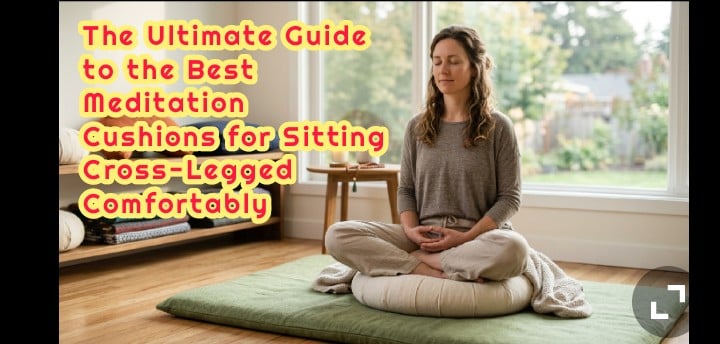
Welcome to another journey into holistic health and mindful living. My dear friends, if you have ever tried to maintain a deep, uninterrupted meditation practice, you know that the mind is only half the battle. The physical body—particularly the hips, knees, and lower back—can quickly become a loud distraction. We often sit with the intention of achieving stillness, but within ten minutes, an ache in the lower spine or a numbness in the legs pulls us right back into the physical realm.
When we talk about natural healing, wellness, and the profound science of Yoga, we must recognize that physical alignment is the absolute foundation of mental tranquility. If the physical vessel is straining, the breath (prana) cannot flow freely. Today, we are going to dive deep into a vital tool for any serious practitioner: the meditation cushion. Without taking up any more time, let's proceed, and discover how elevating your seat can elevate your entire practice.
The Anatomy of the Cross-Legged Seat (Sukhasana and Padmasana)
Sitting cross-legged, whether in the simple Easy Pose (Sukhasana), Half-Lotus (Ardha Padmasana), or the full Lotus Pose (Padmasana), is the traditional posture for deep meditation. But let us be honest about our modern bodies. As far as reality is concerned, most of us spend hours folded into chairs, staring at screens, and driving cars. This modern lifestyle creates tight hip flexors, shortened hamstrings, and a weakened lower back. When we suddenly drop to the floor and expect our bodies to comfortably hold a cross-legged position for thirty minutes, we are asking for a miracle.
When you sit flat on the floor, your knees are naturally higher than your hips. This forces your pelvis to tuck backward (posterior tilt), which rounds the lower back. To compensate, your upper back hunches, your chest collapses, and your neck cranes forward. This posture restricts the diaphragm, making deep, diaphragmatic breathing nearly impossible. It also places immense pressure on the lumbar spine and the sciatic nerve, leading to the dreaded "sleeping leg" sensation.
The goal of a meditation cushion is simple but transformative: it elevates the hips above the knees. When your hips are lifted, the pelvis can tilt slightly forward (anterior tilt). This natural curvature allows the spine to stack effortlessly, vertebra by vertebra, like a stack of golden coins. The chest opens, the shoulders drop, and the breath can cascade deeply into the belly. In my experience, a good cushion does not just support your body; it actively participates in your meditation by removing physical resistance.
Demystifying the Cushion: Zafus, Zabutons, and More
Before we look at specific recommendations, we need to understand the terminology. Walk into any yoga studio or holistic center, and you will hear words like "zafu" and "zabuton" tossed around. Let's explore this now, so you know exactly what you are looking for.
The Zafu: This is the classic, round meditation cushion. Originating from Zen traditions, the zafu is typically filled with buckwheat hulls or kapok (a natural, cotton-like plant fiber). The round shape allows you to sit on the front third of the cushion, letting your thighs slope downward. Modern variations include the Crescent (or half-moon) zafu, which provides more room to tuck your heels in closely, and the V-shaped (Cosmic) zafu, which offers specialized support for the upper thighs.
The Zabuton: Think of this as the zafu’s best friend. A zabuton is a large, flat, rectangular floor mat, usually heavily padded with cotton. You place your zafu on top of the zabuton. While the zafu elevates the hips, the zabuton provides a soft, warm landing pad for your knees, shins, and ankles, protecting them from hard floors.
The Bolster: While typically used for restorative yoga, a cylindrical or rectangular bolster can also serve as a meditation seat, especially if you prefer a kneeling posture (Vajrasana) or straddling the cushion.
Top Picks for the Best Meditation Cushions
Whether you are practicing in a dedicated wellness room or a quiet corner of your home, having the right gear is essential. Here are some of the finest meditation cushions available today that will help you sit cross-legged comfortably.
1. The Classic Choice: Sarveda Zafu and Zabuton Combo
For those who appreciate traditional craftsmanship and organic materials, the Sarveda Zafu and Zabuton set is a phenomenal choice. Known for aligning with the ancient wisdom of Yoga and Ayurveda, their cushions are filled with high-quality organic cotton or buckwheat hulls. The zafu provides the perfect height to elevate the pelvis, while the accompanying zabuton ensures your ankles are completely shielded from the floor. The beauty of a buckwheat-filled zafu is that it acts like firm sand; it conforms exactly to the unique shape of your sit bones. Furthermore, you can usually unzip the inner liner to adjust the amount of buckwheat, making it highly customizable.
2. The Ergonomic Innovator: Hugger Mugger V-Shaped Cushion
If you have a history of lower back pain, the traditional round zafu might still leave you feeling a bit unsupported. This is where the Hugger Mugger V-Shaped Cushion shines. The unique V-shape is designed to slope downward, supporting not just the buttocks but the entire length of the upper thighs. By supporting the femur bones, it takes an incredible amount of strain off the hips and lower back. The angle actively encourages your pelvis to tilt forward, virtually guiding your spine into a healthy, upright alignment.
3. The Flexibility Enhancer: Mindful Modern Crescent Meditation Cushion
If you love the idea of a zafu but find that the round shape pushes your feet too far away from your center of gravity, a crescent-shaped cushion is the answer. The Mindful Modern Crescent cushion features a curved cut-out in the front. This ergonomic divot allows you to pull your heels in much closer to your perineum, which is especially helpful for practitioners working toward a full Lotus posture. The slope of the crescent shape naturally guides the knees downward, creating a stable, three-point base (your two knees and your seat) that roots you firmly to the earth.
4. The Budget-Friendly Workhorse: Waterglider Buckwheat Filled Round Zafu
You do not need to spend a fortune to drastically improve your posture. The Waterglider Zafu is widely celebrated as an excellent, high-value option. It boasts a sturdy organic cotton cover, a convenient carrying handle, and a robust filling of buckwheat hulls. It is highly durable and provides the exact same mechanical benefits—hip elevation and spinal alignment—as cushions that cost three times as much. It is a perfect entry point for those just starting to explore a seated practice.
5. The Restorative Hybrid: Manduka Enlight Rectangular Bolster
While strictly a yoga bolster, the Manduka Enlight is a staple in many wellness routines. If sitting cross-legged is currently too painful due to knee injuries or extreme hip tightness, this bolster is a wonderful alternative. You can place it between your legs and sit kneeling in Hero Pose (Virasana). The microfiber cover is incredibly soft, and the filling offers plush yet resilient support. It is versatile enough to be used for heart-opening backbends, supported forward folds, and your daily meditation.
Choosing Your Perfect Match
Selecting a meditation cushion is a highly personal endeavor. What works for a flexible gymnast will not necessarily work for someone recovering from an injury. Here are the main factors to consider:
Your Flexibility: If your hips are very tight and your knees pop up high when you sit cross-legged, you need a taller cushion (like a thickly stuffed round zafu). If you are quite flexible and your knees easily touch the floor, a lower cushion (like a slightly deflated crescent zafu) will suffice.
The Filling Material: Buckwheat hulls are firm, heavy, and contour nicely to the body, offering a grounded, stable feel. Kapok fiber is lighter, softer, and has a bit more "give," which might be preferable for those with sensitive tailbones. Cotton batting is traditional and solid but can compress and harden over time.
Maintenance: Look for cushions with removable, machine-washable covers. If you use your cushion daily, it will eventually need a wash.
The Deeper Purpose of Posture
It is easy to get caught up in the consumer aspect of wellness, but remember that these cushions are merely tools to aid you on a profound inward journey. In the yogic tradition, the spine is considered the central channel of energy (the Sushumna Nadi). When the spine is slouching, the vital life force cannot rise smoothly. By using a cushion to align the physical body, we are preparing the energetic body for awakening.
When your body is perfectly supported, it sends a signal to your nervous system that you are safe. The fight-or-flight response deactivates, your heart rate slows, and the parasympathetic nervous system takes over. You stop fighting gravity and begin to float within it. This is the state where true healing occurs.
Conclusion
Establishing a daily meditation practice is one of the most loving and transformative commitments you can make for your holistic health. But you do not have to suffer through physical pain to achieve mental clarity. A high-quality meditation cushion, tailored to your body's specific needs, is a worthy investment in your well-being. The goal remains the same: to find a seat that is both steady and joyful (Sthira Sukham Asanam).
Elevate your hips, align your spine, and let your breath flow without restriction. May your practice be deep, your mind be clear, and your body be at ease.
Contact
rkyogablog@gmail.com