Note: Consult a doctor for health advice. Check out my favorite health products here: (Amazon Affiliate commission applies)

Top Books on Naturopathy and Diet Planning for Yoga Practitioners
Elevate your yoga practice off the mat with our guide to the best books on naturopathy and diet planning for yogis. Explore ancient Ayurvedic wisdom, sattvik recipes, and modern plant-based science to nourish your body and mind.Top Books on Naturopathy and Diet Planning for Yoga Practitioners
NATUROPATHY YOGA TREATMENT
Rajesh Kumar
5/6/20267 min read
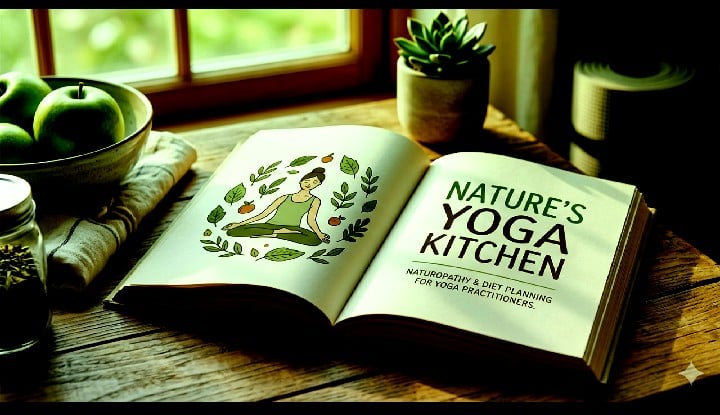
Hey there, my dear friends! I am so happy you stopped by today. If you’re anything like me, you’ve probably spent a good chunk of time on your yoga mat, stretching out those tight hamstrings and trying to find a little bit of peace in this busy world. But as far as reality is concerned, what we do on the mat is only half the battle.
I have observed that the real magic happens when we look at what we’re putting into our bodies and how we treat ourselves when the yoga pants come off. In my experience, pairing yoga with naturopathy—which is really just a fancy way of saying "nature’s own healing"—is like finding the missing puzzle piece. It just clicks.
I remember a few years back, I was practicing yoga every single day, but I felt sluggish. I was eating a lot of processed "health bars" and wondering why my energy was tanking. A friend handed me a book on natural eating, and it totally shifted my perspective. I realized that my body isn't a machine; it's a garden that needs the right soil.
So, let's explore this now. I’ve rounded up some of my absolute favorite books that bridge the gap between your yoga practice, natural healing, and smart diet planning. Without further ado, let's proceed!
Healing with Whole Foods by Paul Pitchford
This book is basically the "big blue bible" of the natural health world. I feel that if you only ever buy one book on nutrition, this should probably be it. It’s thick, it’s heavy, and it’s packed with so much wisdom that you’ll be flipping through it for years.
What I love about Pitchford’s approach is how he blends modern nutrition with ancient traditions like Chinese medicine. For a yoga practitioner, this is gold. He doesn't just talk about calories or grams of protein. Instead, he talks about the "energy" of food. For example, if you’re feeling scattered and anxious after a long vinyasa session, he might suggest grounding foods like root vegetables rather than a cold salad.
In my experience, following his advice on "dampness" in the body—which basically means that sluggish, bloated feeling—helped me feel much lighter during my morning sun salutations. It’s not a quick read, but it’s a deep one.
The Sattvik Kitchen by Neelima Deshmukh
If you’ve been around the yoga world for a minute, you’ve probably heard the word "Sattvik." It refers to food that is pure, light, and easy to digest. I’ve observed that many people think Sattvik food is boring or bland, but this book proves them wrong.
Neelima Deshmukh does a wonderful job of explaining how the food we eat affects our minds. If you eat heavy, greasy food, your mind feels heavy and greasy. If you eat fresh, vibrant food, your meditation suddenly gets a whole lot easier.
I feel that this book is perfect for someone who wants to align their diet with the "Ahimsa" (non-violence) principle of yoga. The recipes are simple, and she uses ingredients that you can actually find at a normal grocery store. It’s friendly, it’s practical, and the pictures are beautiful.
Nature Cure by Mahatma Gandhi
Now, this one might surprise you! Most people know Gandhi for his incredible leadership, but he was also a huge believer in naturopathy. He actually wrote a short book called *Nature Cure*, and it’s a gem.
He was a big fan of the "five elements"—earth, water, air, sunlight, and ether. He believed that most of our problems could be solved by just getting back to basics. I have observed that we often overcomplicate health. We look for the newest supplement or the most expensive juice cleanse, when Gandhi reminds us that a simple mud pack or a bit of sun can do wonders.
It’s a very short read, but it’s deeply humbling. It reminds me that our bodies have an amazing ability to heal themselves if we just get out of the way. If you’re looking for a grounded, no-nonsense approach to natural living, give this a look.
The Complete Book of Ayurvedic Home Remedies by Vasant Lad
Yoga and Ayurveda are like sisters; you really can’t have one without the other. Dr. Vasant Lad is a legend in this field, and this book is like having a kind, wise grandfather sitting in your kitchen with you.
As far as reality is concerned, we all get sick sometimes. We get colds, we get headaches, or maybe our digestion feels a bit "off." Instead of reaching for a bottle of aspirin, this book teaches you how to look at your "Dosha" (your body type) and fix the root of the problem.
I feel that every yoga practitioner should know if they are a Vata, Pitta, or Kapha. It changes everything! For instance, I’m a high-Vata person, which means I tend to get cold and anxious easily. Dr. Lad’s book taught me to stop drinking ice-cold smoothies in the winter and start eating warm, spiced lentils. My joints stopped cracking so much during my yoga practice almost immediately. It was a total game-changer.
Diet and Diet Reform by Mahatma Gandhi
I'm bringing Gandhi back for a second round because his thoughts on food were so revolutionary for his time. In *Diet and Diet Reform*, he talks about his experiments with food. And let me tell you, he experimented with everything!
He tried being a fruitarian, he tried raw diets, and he spent a lot of time thinking about how much we actually *need* to eat versus how much we *want* to eat. My dear friends, we live in a world of "more, more, more," and Gandhi's writing is a breath of fresh air.
He emphasizes that a yogi’s diet should be minimal but nourishing. It’s not about starving yourself; it’s about respect. Respect for the earth and respect for your stomach. This book is great if you want to challenge your relationship with food and move toward a more conscious way of eating.
The Yoga of Herbs by David Frawley and Vasant Lad
This book is a bit more technical, but it’s fascinating. It’s all about how to use herbs to support your yoga practice. If you’ve ever wondered why your yoga teacher is always talking about Ashwagandha or Turmeric, this book will give you the answers.
In my experience, using the right herbs can act like a "support system" for your nervous system. When I was training for my yoga teacher certification, I was exhausted. I started using some of the herbal suggestions in this book, and I noticed that my recovery time after long practice sessions was much faster.
They explain the "energetics" of herbs—which ones are cooling, which ones are heating, and how they interact with your breath. It’s a fantastic resource to keep on your shelf for when you need a little extra natural boost.
Everyday Ayurveda for Women’s Health by Kate O'Donnell
I want to include this one because I feel that women’s bodies have very specific needs that aren't always addressed in general health books. Kate O'Donnell is a yoga teacher and an Ayurvedic practitioner, and she writes in a way that is so relatable and kind.
She breaks down how to eat and practice yoga during different phases of your life—and even different phases of your monthly cycle. I have observed that so many of us try to push through the same intense workout every single day, but our bodies aren't designed for that.
This book taught me to be gentler with myself. It’s full of delicious, seasonal recipes and lifestyle tips that make you feel like you’re finally working *with* your body instead of fighting against it.
How Not to Die by Michael Greger
Okay, I know the title is a bit intense! But Dr. Greger is a huge advocate for a whole-food, plant-based diet, which aligns perfectly with the yogic lifestyle.
While this isn't a "yoga" book per se, it is a powerhouse of scientific evidence for why we should be eating more plants. As far as reality is concerned, it’s nice to have some hard science to back up what the ancient yogis have been saying for thousands of years.
He has this thing called the "Daily Dozen," which is a checklist of twelve things you should try to eat every day (like beans, berries, and greens). I started using his checklist, and I feel like a superhero. My balance on the mat improved, and my skin cleared up. It’s a big book, but you can just skip to the sections that interest you.
The Detox Miracle Sourcebook by Robert Morse
If you’re interested in the deep-cleaning aspect of naturopathy, this is the one for you. Dr. Morse focuses on the lymphatic system—the "sewage system" of the body.
In my experience, a lot of the stiffness we feel in our yoga practice is actually just "congestion" in our tissues. This book explains how to use raw fruits and herbs to clear out that congestion.
Now, a little word of caution: his approach is very hardcore. He advocates for a lot of fruit and raw food. I don't follow it 100% of the time, but I have used his methods for short cleanses, and the results were pretty amazing. I felt like I could twist deeper and breathe more clearly than ever before. It’s a great read if you want to understand the "detox" side of natural healing.
Choosing what works for you
I know that’s a lot of books to think about! But here is the thing: you don’t have to read them all at once. My dear friends, health is a journey, not a race.
Maybe you start with something simple like *The Sattvik Kitchen* to get some new recipe ideas. Or maybe you grab Vasant Lad’s book because you’re tired of having a rumbly tummy after your morning practice.
The most important thing I have observed is that your body is your best teacher. These books are just guides. They give you the tools, but you have to be the one to listen to how the food and the practices make you feel.
I feel that when we start eating for our health and practicing yoga for our souls, everything starts to align. You’ll find that you’re not just more flexible on the mat, but you’re more flexible in your life, too. You’ll handle stress better, you’ll sleep deeper, and you’ll have a lot more smiles to give away.
So, go ahead and pick one that calls to you. Dive in, try a recipe, experiment with an herb, and see what happens. I think you’ll be pleasantly surprised at how much your body loves being treated like the natural wonder it is.
Happy reading, and I'll see you on the mat!
Contact
rkyogablog@gmail.com